An architecture and engineering firm: getting paid for every hour
A firm that sells time in phases against fees set before anyone knows the work. Principals, project managers, staff, an office admin and outside consultants. Names are left out.

The challenge
Profit depended on four things: scheduling the time, controlling the time, staying within scope, and getting paid for every hour. Project accounting, planning, the books and a stack of spreadsheets each held a piece, so overruns and extra services were found after the money was gone.
| Before | What it was used for | What it missed |
|---|---|---|
| Project accounting software | Timesheets, billing | Fee-left views ended up in spreadsheets |
| Planning software | Phases, staffing | The books and payroll lived elsewhere |
| General accounting software | The books, bank feeds | Didn't know phases, fees or reserve |
| Spreadsheets and email | Fees, profit, approvals | Rebuilt per project; stale the day they were saved |
What we found in discovery
- Phases ran over budget and nobody knew until they were done.
- Client-requested revisions were done and never written up or billed.
- Timesheets came in late from memory, so invoices went out late.
- Decision makers rebuilt reports by hand before every decision.
- Tasks depended on someone remembering the order.
What we built
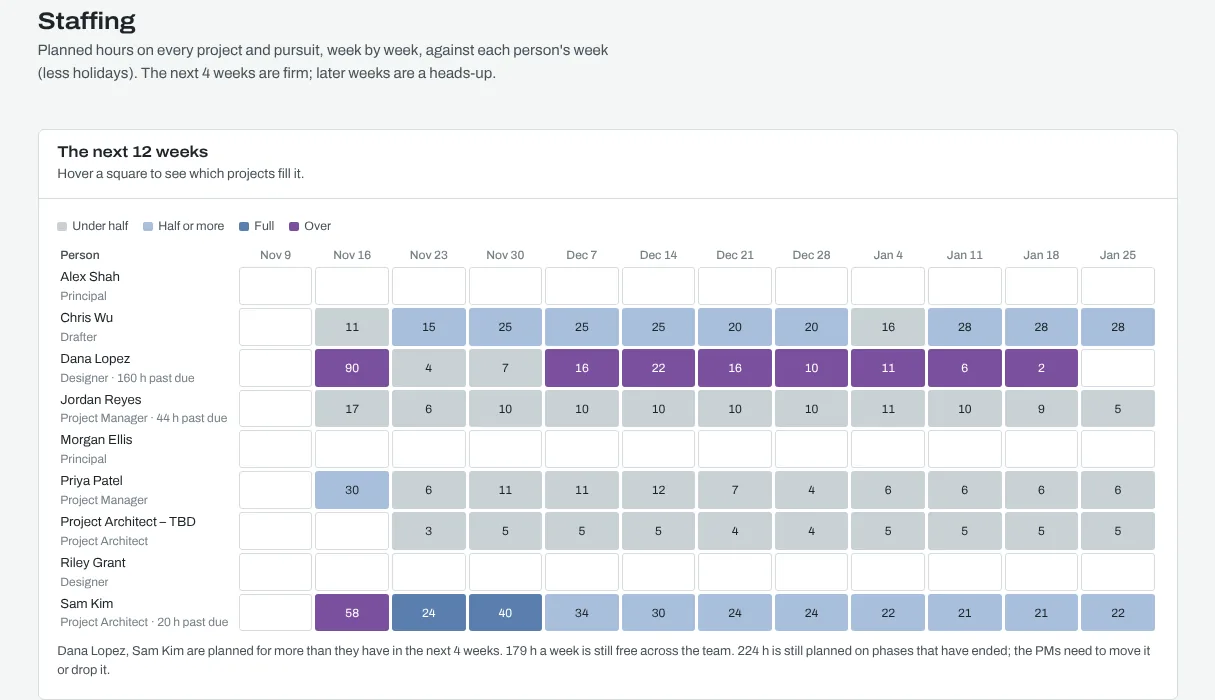
- Project setup and planningBuilt and in useTerms, phases, team, fee and retainer, then a plan with hours by person and phase and projected profit on every change.
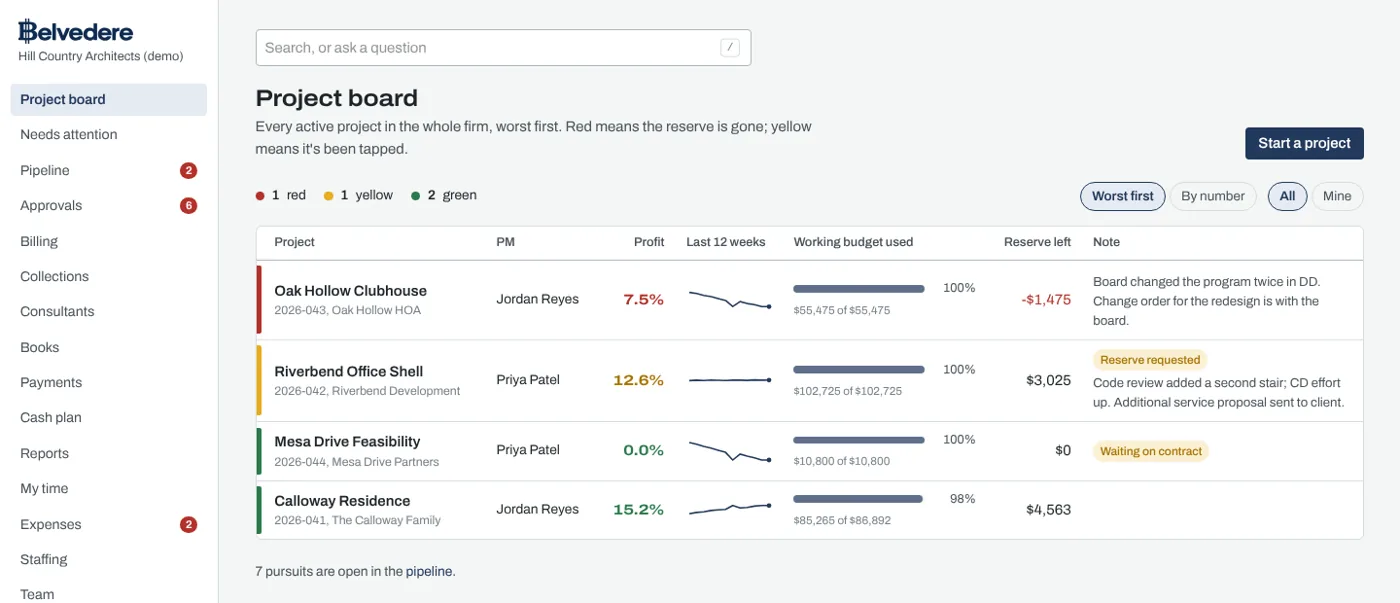
- Budget rules and project colorsBuilt and in useA hard working budget with reserve and target profit; every project's health, worst first.
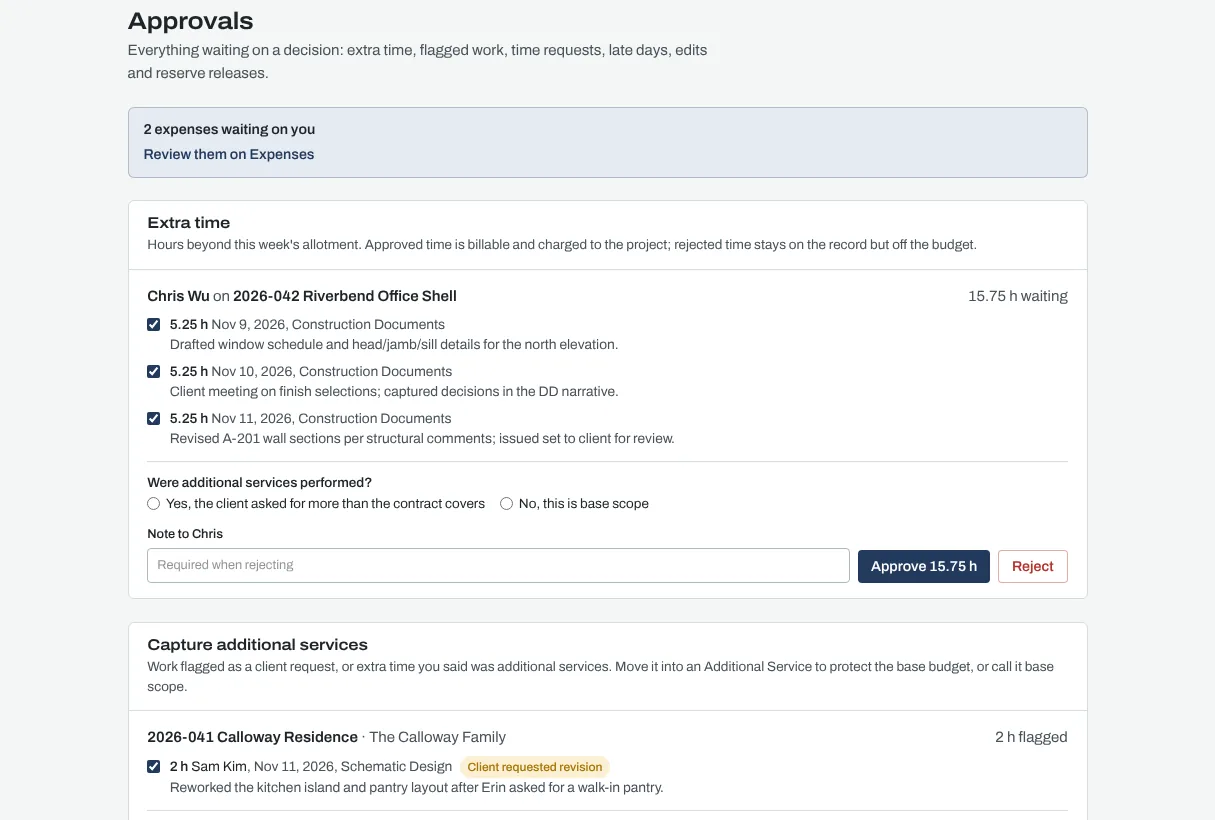
- Timesheets from the planBuilt and in useEach week's hours prefilled; extra time needs a PM's approval.
- Additional servicesBuilt and in useClient-requested work becomes an approved service or is called base scope with a reason.
- Billing that drafts itselfBuilt and in useDrafts the morning after the cutoff; PMs confirm, a principal approves and sends.
- Payments and collectionsBuilt and in useBank-transfer pay links and scheduled reminders.
- Consultants and expensesBuilt and in useConsultant bills and reimbursables flow onto invoices.
- Books and owners' viewsBuilt and in useThe journal, bank feeds, cash plan and firm health in one place.
What it connects to
| Connects to | What flows |
|---|---|
| The firm's old systems | Projects, clients, open invoices, people and rates at the start |
| Bank and card accounts | Transactions matched to invoices and bills |
| Online payments | Clients pay invoices by bank transfer |
| Payroll provider | Hours, pay and bonuses each period |
Results
8% more profitable
across the firm
Scope creep caught early
extra services approved and billed instead of absorbed
Steps in order
tasks no longer missed or done out of sequence
Decisions on current numbers
no reformatting or digging through reports
Measured by the owners within weeks of going live. These are results from one business; every business is different, and we'll estimate yours in your Operations Map.
Less overrun and absorbed scope, more billable work
Climbed as overruns were caught early
Illustrations, not measurements.
How the principals' work changed
The principals no longer find out about overruns at month end or rebuild reports before every decision. Each decision maker sees what they need, current, and the process makes sure work is scoped, approved and billed in the right order.